“… I believe that now, on the eve of a new millennium, it is time to break the silence. “It is time for us to say out loud (...) and for the world to hear: it is no longer acceptable to treat women’s rights as separate from human rights (...) If there is one message that must ring out (...) let it be this: human rights are women’s rights, and women’s rights are human rights—once and for all.”
In 1995, Hillary Rodham Clinton—then First Lady of the United States— raised her voice in Beijing during the Fourth World Conference on Women organized by the United Nations. There, she forcefully argued that women’s rights are inseparable from human rights, summarizing her message in a phrase that became a global emblem: “human rights are women’s rights, and women’s rights are human rights”
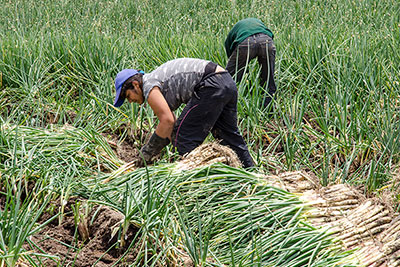
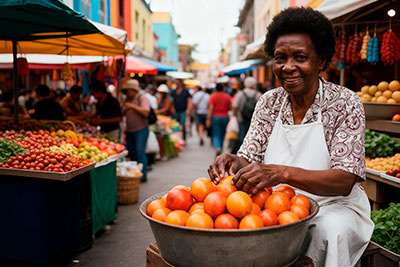
In almost all territories, women have lower labor-force participation rates and higher levels of informality. Wage inequalities persist, and women’s use of financial and digital platforms remains lower— especially in rural areas—limiting their integration into the digital economy.
Those words, which echoed the struggles that abolitionist and proto-feminist women had been advancing since the nineteenth century, marked a turning point, because gender inequalities between men and women persist worldwide. Today, however, measuring gender gaps requires a broader perspective: recognizing not only the inequalities that have historically affected women, but also those that, in certain areas, disproportionately affect men. Equity, by definition, requires examining both sides of the balance.
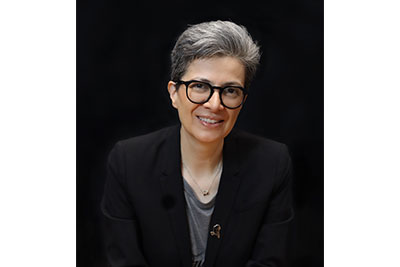
“Clinton’s words resonated because of their symbolic power and because they reflected a consensus that had been developing within the international women’s movement”, explains Lina María Céspedes, professor at the Faculty of Jurisprudence at the Universidad del Rosario. “Beyond the speech, it was what happened in Beijing in 1995 (the adoption of the Beijing Declaration and Platform for Action and the commitments made by the states) that helped drive a global agenda focused on monitoring, accountability, and production of information on gender equality. To measure is to recognize, and that is the first step towards transformation”, she concludes.
In 2011, the United Nations created UN Women, together with the Women Count initiative, aimed at improving the production, use, and dissemination of gender data and statistics. “Measuring allows us to generate evidence to understand the status of women’s rights and guide the formulation of public policy” Céspedes notes.
However, global indices do not always capture territorial disparities or inequalities that may also affect men. In Colombia, initiatives such as the Departmental Gender Equality Index (2020)—developed by the Center for Educational Research and Development for Women’s Equality and Kynapsys Research and Consultancy—as well as the reports Women and Men: Gender Gaps in Colombia, prepared by the National Administrative Department of Statistics (DANE), UN Women, and the Presidential Council for Women’s Equality (2020 and 2022), have represented significant progress around multiple dimensions of inequality from a territorial perspective. At the same time, they paved the way for further exploration of new conceptual and methodological approaches that could provide a more detailed understanding of how gender gaps are structured across departments.
Measuring gender gaps today requires a broader perspective: one that recognizes not only the inequalities that have historically affected women, but also those that, in certain areas, may affect men more.
In response to these limitations, a shared question emerged among the Universidad del Rosario, the Private Competitiveness Council (CPC), and Davivienda: “how can we contribute to improving existing measurements through a stronger conceptual framework capable of structuring pillars that capture the different dimensions of inequality experienced by women and men?” explains Professor Céspedes.
This effort led to the creation of the Subregional Gender Gap Measure (MSBG), a tool designed to understand how inequalities vary across different territories. “We wanted a measurement that went beyond comparing economic indicators and instead contextualized differences in living conditions and opportunities for women and men based on the structural conditions of each territory,” explains Daniel Torralba Barreto, researcher for the study and coordinator of the Center for Regional Competitiveness Studies (SCORE) at the Universidad del Rosario.
What is the MSBG and how was it created?
The MSBG 2024 is a tool for analyzing structural inequalities between women and men across six thematic pillars: well-being, care, markets, leadership, education, and health. The measurement compiles 74 indicators from 13 sources, including the National Administrative Department of Statistics (DANE), the Ministries of Education and Health, and the Financial Superintendency of Colombia. These data allow for comparisons between the Capital District and the 32 departments of Colombia
Each pillar is divided into sub-pillars covering areas such as access to services, labor-force participation, and mental health. The MSBG integrates social, economic, and infrastructure variables into a single measurement that summarizes the level of gender equity in each territory.
“One of the main challenges was to rigorously conceptualize what we mean by gap, gender, and equity,” Torralba adds. “We did not want to measure only the differences between women and men, but also the structural conditions in each territory that both explain those differences and make them visible.”
Although the methodology may be complex, its core logic is simple: it measures differences in access, opportunities, and outcomes between women and men, adjusted for each territory’s level of development. This approach allows for fairer comparisons and helps explain why inequalities persist.
The methodology also prioritizes transparency and replicability. “We continue to refine how this gap is defined and measured across the country, and we invite the research community to review and discuss the methodology with the aim of improving it,” Torralba says.
Where are the gaps in care, work , education, and health?
The pillar corresponding to care infrastructure is one of the most innovative components of the MSBG. It recognizes the economic and social value of domestic and unpaid care work, which has historically remained invisible, and incorporates variables such as the presence of care centers, access to basic services, and the distribution of time between women and men. Its inclusion underscores that collective well-being depends on life-sustaining care networks, often maintained by women without recognition or institutional support.
“In rural areas with high levels of poverty, the lack of specialized centers and adequate transportation means that women spend more time on household duties, restricting their access to the most valuable resource: time. Only with time can they access employment or education,” reflects Lina Céspedes, principal researcher of the MSBG and professor at the Faculty of Jurisprudence at Universidad del Rosario
The MSBG results show that inequalities in infrastructure and care services are among the main drivers of gender gaps in the country. “In rural areas with high levels of poverty, the lack of specialized centers and adequate transportation means that women spend more time on household tasks, limiting their access to the most valuable resource: time. Only with time can they pursue employment or education,” explains Céspedes, principal investigator of the MSBG. Recognizing care as a right rather than a private responsibility is essential for advancing toward genuine gender equality
In 2025, the Inter-American Court of Human Rights recognized the right to care as an autonomous right, grounded in the principles of shared responsibility, equality, and solidarity. As Professor Céspedes reflects in her blog Una cuestión de cuidado (A Matter of Care), caring is not a natural mandate or a feminine virtue, but rather a social and historical practice shaped by economic, technological, and cultural factors.
The analysis of the markets pillar confirms that economic autonomy remains a central challenge. Across nearly all territories, women have lower labor-force participation rates and higher levels of informality. Wage inequalities persist, and women’s use of financial and digital platforms remains lower—particularly in rural areas—limiting their integration into the digital economy
“With regards to access to representative and leadership positions, the results show progress but also significant challenges,” says Pamela Caiza Guamán, economist and researcher for SCORE. “Although women’s participation in management positions within public administration has increased, their presence in elected offices—such as mayors, governors, and members of Congress—remains limited.” Several barriers persist, including limited access to campaign financing, reduced media visibility, and gender stereotypes that shape public perceptions of women’s leadership.
How do these stereotypes manifest themselves? One illustrative example appears in the film Barbie (2023). The story highlights gender dynamics by sharply reversing traditional roles. In Barbie’s universe, Barbieland, women occupy positions of power, while the men—the Kens—are relegated to secondary roles. At one point in the film, Ken confidently declares, “I’m Kenough,” a play on words combining his name with the word “enough,” suggesting that he is sufficient in himself and does not require others’ approval.
“We wanted a measurement that went beyond comparing economic figures and that could contextualize differences in living conditions and opportunities for men and women, based on the structural conditions of each territory,” explains Daniel Torralba Barreto, researcher of the study and coordinator of the Center for Regional Competitiveness Studies (SCORE) at Universidad del Rosario.
Viewed through Ken’s perspective, the narrative offers a useful analogy for understanding what many women experience in the real world: the challenge of being recognized as leaders, even when they possess the same—or greater—qualifications as men. As the film suggests, the challenge is not only to create space for women in leadership, but also to transform the cultural norms that still treat women’s presence in positions of power as exceptional.
In the field of education, the MSBG reveals several contrasts. Although women have higher enrollment rates at most educational levels, they also face higher illiteracy rates in regions with high rurality and a significant presence of ethnic communities. Educational retention and quality remain major challenges, particularly in areas with limited infrastructure or high levels of poverty.
In health, the study highlights gaps related to access to services, mental health, and mortality. “Here, the gap tilts toward men, who have lower rates of access to mental-health services, which in turn is associated with higher suicide mortality,” explains Daniel Torralba Barreto. In Colombia, for example, men account for nearly 80% of suicides recorded between 1990 and 2019.
This pattern suggests that gender gaps in mental health have important nuances. While men face significant vulnerability in terms of mental health and mortality in departments such as the Department of Chocó, in the Departments of Amazonas and La Guajira, limited health infrastructure disproportionately affects women—highlighting the direct relationship between territorial development and well-being. These findings confirm that gender inequalities affect women and men differently depending on the territorial context.
More than a measurement, a road map
For Céspedes, the main virtue of the MSBG is not the ranking itself, but its capacity to provide evidence for action: “Measuring makes it possible to identify where inequalities exist for both women and men and, above all, to guide policies that respond to the realities of each territory.” For his part, Torralba adds that: “this is not about competing between departments, but about understanding the causes of the gaps in order to transform them.”
Furthermore, this measurement seeks to promote dialog between academia, the state, the private sector, and civil society about how to build more equitable territories for both men and women, since gender equity is a driving force for the country’s economic development.
Ultimately, the MSBG is not intended to be an isolated technical exercise, but rather a tool for change. Its value lies in putting concrete data on the table that make gender inequalities visible (in all directions) and help guide informed decision-making. Measuring is not an end in itself, but the first step toward building policies that are fairer, more effective, and better adapted to the country’s diversity
Results of the Departmental Gender Gap Measurement
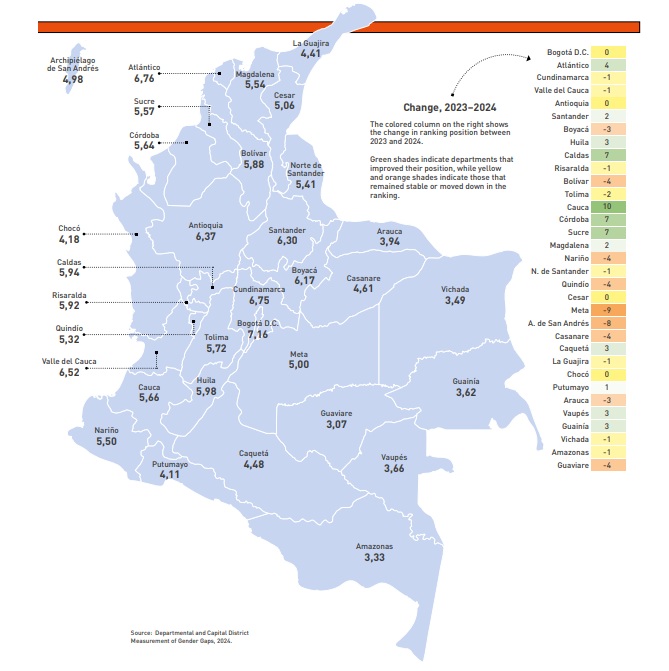
This figure presents the results of the 2024 Subregional Gender Gap Measurement (MSBG), which assesses gender equality across the 32 departments and the Capital District of Colombia.
Before interpreting the ranking, it is important to clarify a key point: in this measurement, a higher score does not indicate a larger gap—quite the opposite. A higher score reflects greater equality, meaning a smaller gap between the conditions and opportunities of women and men.
On a scale from 0 to 10, the higher the score, the smaller the gender gap and the greater the level of equity.
According to the results, Bogotá leads the ranking with a score of 7.16, followed by the Department of Atlántico with 6.76 and the Department of Cundinamarca with 6.75, indicating that these territories show the greatest progress toward equal opportunities.
At the other end of the ranking, the Departments of Guaviare (3.07) and Amazonas (3.33) display the largest gender gaps, reflecting structural challenges in areas such as education, health, and leadership.
The national average is 5.5, meaning that nearly half of the departments fall below the average level of gender equity, particularly in the care and markets pillars.