


Itinerant Intercultural School:
Oraliture, traditional medicine and creativity
June 16 to 19, 2026
Organizing Institutions
- University College Cork, Irlanda
- Pontificia Universidad Javeriana
- Universidad del Rosario
Supporting institutions
- Universidad de Cartagena
Dates:
June 16 to 19, 2026
Schedule
8:00 a.m. to 5:00 p.m.
Language:
Spanish with English translation
Format
In-person
Place
Claustro UR, Javeriana, Jardín Botánico y Salida Académica
Duration
32 horas
Description
The Itinerant Intercultural School proposes an intensive learning experience aimed at engaging with Indigenous knowledge holders, in dialogue with contemporary debates on epistemic justice, the decolonization of higher education, sustainability, and the transformation of academic knowledge production.
In a context marked by social, ecological, and political crises, the program invites participants to question the historical hierarchies that have defined which forms of knowledge are considered legitimate. Within this framework, Indigenous knowledge is approached as contemporary epistemologies, connected to governance systems, territorial care, traditional medicine, oraliture, memory, and political action.
From an intercultural and applied perspective, the course combines academic sessions, direct dialogue with Indigenous authorities and knowledge holders (Mamu, Taita, and community leaders), participatory workshops, and field-based learning experiences. Rather than being a course about Indigenous knowledge, this school creates the conditions for the co-production of knowledge, fostering dialogue between different knowledge systems and promoting collective responses to global challenges.
- Intensive academic experience with direct dialogue between universities and Indigenous knowledge holders.
- Relevant training for those seeking to understand interculturality beyond superficial or purely normative approaches.
- Development of transferable skills applicable to professional contexts in education, research, cultural management, territorial work, public policy, and sustainability.
- Participation in a collaborative and international experience with partner institutions from Colombia and Ireland.
- Award of a digital badge and possibility of credit recognition, subject to approval by the respective academic programs.
- Critical thinking to analyze knowledge hierarchies, intercultural relations, and contemporary debates on epistemic justice.
- Ability to interpret the contemporary role of Indigenous knowledge in educational, territorial, environmental, and political contexts.
- Intercultural dialogue skills, active listening, and respectful communication in contexts of epistemic and cultural diversity.
- Capacity to work collaboratively in interdisciplinary and intercultural teams.
- Ability to translate conceptual and situated learning into applied, ethically grounded, and contextually relevant proposals.
The course is aimed at undergraduate and graduate students, professionals, and individuals interested in the social sciences and humanities, education, sustainability, cultural management, community-based work, international cooperation, and public policy.
Potential profiles include students and graduates in anthropology, sociology, history, literature, cultural studies, philosophy, education, political science, environmental studies, law, community health, and related fields; educators; cultural managers; professionals from NGOs, public institutions, or community-based projects; researchers in training; and intercultural mediators.
Main areas of interest: Indigenous knowledge, epistemic justice, intercultural education, oraliture, traditional medicine, sustainability, territoriality, collective rights, and dialogue of knowledge systems.
Estimated age range for marketing strategy: 20 to 50 years.
The school will be delivered through a learner-centered methodology, combining introductory lectures, dialogues with Indigenous knowledge holders, collective case analysis, participatory workshops, observation and reflection activities in the field, and group work spaces oriented toward the development of a final project.
A collaborative, reflective, and experiential pedagogy will be prioritized. This means that participants will not only receive content, but will also be expected to discuss it, contrast it with the situated learning gained from fieldwork, and collectively produce a final proposal.
The course dynamics will emphasize values such as intercultural respect, listening, punctuality, teamwork, responsibility in the field, ethical care for the spoken word, and openness to dialogue among different disciplinary, linguistic, and cultural trajectories.
Support materials will include selected short readings, workshop guides, guidelines for the final project, and, where relevant, bilingual materials in Spanish and English.
| Activity | Description | Weighting | Applies to |
| Qualified Participation | Active participation in dialogues, workshops, and discussions. | 30% | Undergraduate and graduate |
| Short Learning Journal | Individual reflections on sessions and fieldwork. | 30% | Undergraduate and graduate |
| Final Group Project | Collaborative applied proposal integrating course themes. | 40% | Undergraduate and graduate |
- No specialized prior knowledge is required. For this reason, the course is classified as basic level.
- Participants are nevertheless expected to demonstrate genuine interest in intercultural work, willingness to read short materials, active participation in discussions, and availability to attend the academic field trip outside Bogotá.
- No technical tools or specialized software are required. The academic team will provide readings and basic guidelines in advance.
General Objective
To critically understand the contemporary contributions of Indigenous knowledge to debates on epistemic justice, sustainability, and governance through intercultural dialogue, fieldwork, and the development of collaborative applied projects.
Specific Objectives
- To critically analyze the concept of epistemic justice and its implications in intercultural contexts.
- To examine the role of oraliture, traditional medicine, and territorial knowledge in contemporary debates on sustainability, autonomy, and collective rights.
- To strengthen listening, dialogue, and intercultural collaboration skills through direct interaction with Indigenous knowledge holders, authorities, and creators.
- To connect theoretical discussions with situated field experiences and contemporary challenges in educational, social, environmental, and cultural contexts.
- To design and present a group-based applied proposal that integrates conceptual tools, situated learning, and principles of knowledge co-production.
Speakers
Indigenous Knowledge Holders and Guest Faculty
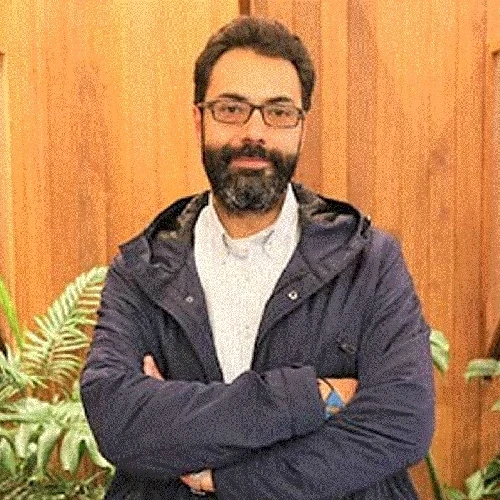
Dean and Associate Professor
School of Human Sciences
Universidad del Rosario
School of Human Sciences
Universidad del Rosario
Carlos Miguel Gómez
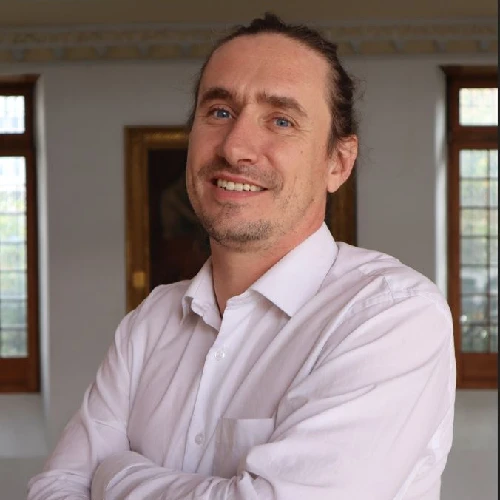
Full Professor of Anthropology
Universidad del Rosario
Universidad del Rosario
Bastien Bosa
Associate Professor of Literature
Pontificia Universidad Javeriana
Pontificia Universidad Javeriana
Miguel Rocha

Associate Professor, Study of Religions and Anthropology, School of Society, Politics and Ethics
University College Cork (Ireland)
University College Cork (Ireland)
Lidia Guzy

Knowledge keeper, poet, and oralitor
from the Yanacona people
from the Yanacona people
Fredy Chicangana (Wiñay Mallki)
Taita (traditional healer), artist, and knowledge holder
from the Inga people of Putumayo
from the Inga people of Putumayo
Domingo Cuatindioy & Pastora
Spiritual authority of the Arhuaco (Iku) people
Mamo Seyaringumu Torres Chaparro

Member of the Arhuaco (Iku) people
Margareth Durán Izquierdo
Agricultural engineer and member of
the Zenú Indigenous community
the Zenú Indigenous community
Lucellys Sierra Márquez
Schedule
Arrival of international participants and optional preparatory session; opening session and first dialogue with Indigenous knowledge holders at Universidad del Rosario; intercultural workshop outside Bogotá; group work and return to Bogotá; second dialogue session at Pontificia Universidad Javeriana and final project presentations
Content
- Conceptual opening
Speaker(s)
- Bosa / Gómez
Skills
- Understand framework
Date
16/06/2026
Venue
Claustro UR
Time
8:00–10:00
Hours
2
Content
- Oraliture and memory
Speaker(s)
- Rocha + guest
Skills
- Recognize oraliture
Date
16/06/2026
Venue
Claustro UR
Time
10:15–12:15
Hours
2
Content
- Dialogue with Indigenous leaders
Speaker(s)
- Indigenous leaders
Skills
- Intercultural listening
Date
16/06/2026
Venue
Claustro UR
Time
2:00–5:00
Hours
3
Content
- Traditional medicine
Speaker(s)
- Guzy + leaders
Skills
- Analyze medicine
Date
17/06/2026
Venue
Botanical Garden
Time
8:00–12:00
Hours
4
Content
- Field learning
Speaker(s)
- Team
Skills
- Apply concepts
Date
17/06/2026
Venue
Botanical Garden
Time
1:00–5:00
Hours
4
Content
- Sustainability & governance
Speaker(s)
- Leaders
Skills
- Link knowledge
Date
18/06/2026
Venue
Bindú, Forest of Arts and Spirituality Supatá
Time
8:00–12:00
Hours
4
Content
- Co-production workshop
Speaker(s)
- Team
Skills
- Design proposal
Date
18/06/2026
Venue
Bindú, Forest of Arts and Spirituality Supatá
Time
1:00–5:00
Hours
4
Content
- Inter-university dialogue
Speaker(s)
- Rocha
Skills
- Compare approaches
Date
19/06/2026
Venue
Javeriana
Time
8:00–12:00
Hours
4
Content
- Final presentations
Speaker(s)
- All
Skills
- Communicate results
Date
19/06/2026
Venue
Javeriana
Time
1:00–5:00
Hours
4
* To be further developed.
Terms and Refund Policy
General Terms
The University reserves the right to cancel the opening of any course or program if the minimum economic conditions required for its operation are not met. In such event, the University shall refund one hundred percent (100%) of the amount paid by students, in the original currency of payment, by electronic transfer to the bank account from which the funds were debited.
If a participant decides not to attend the course or program after having paid the corresponding tuition fee, and provided that the course or program has not yet commenced, the participant may request a refund. In such case, the University shall reimburse ninety percent (90%) of the amount originally received by electronic transfer, retaining ten percent (10%) to cover administrative and banking expenses incurred by the University.
Refunds
If the student has any benefit or discount applicable to the registration fee, they must verify their payment receipt before making payment. If the discount has not been applied, the student must contact the Commercial Office for adjustment at the following number: +57 311 4451452.
Important: No refunds shall be granted for receipts paid without the applicable discounts having been applied.
Certification
The inclusion of the international partner’s logos on the Certificate of Participation shall be subject to the partner’s prior authorization.