“The information available on the management of chronic conditions—particularly hypertension and diabetes—is varied and readily accessible. There is plenty of information and educational material, and these topics are addressed during clinical consultations, a critical question remains: why do some in - dividuals, despite knowing how to care for themselves, fail to adopt appropriate self-ca - re practices?”, noted Martha Torres Narvaez, professor at the School of Medicine and Heal - th Sciences at Universidad del Rosario and principal investigator of the Dragonfly Project. “This is the reason why, through clinical research, the project seeks to identify innova - tive ways to transform health care practices”.
Common recommendations for patients with these conditions include maintaining a balanced diet, engaging in regular physical activity, adhering to prescribed pharmaco - logical treatments, and attending periodic medical consultations. However, compliance with these recommendations is not merely a matter of behavioral modification. Rather, it often involves navigating complex emotional responses, which are not always positive—for example, when patients are advised to elimi - nate or reduce the consumption of beverages such as coffee, that may adversely affect their condition. This raises a question; how should health care professionals communicate effec - tively to patients to make better decisions and become aware of their illness?
According to Juan Mauricio Pardo Oviedo, Dean of the School of Medicine and Health Sciences at Universidad del Rosario and co-re - searcher of the Dragonfly Project, “we are not merely trying to educate the patient from ascientific and clinical perspectives”. We know it can be difficult to give up sweet foods, such as chocolate, because they produce a ple - asurable effect on the brain. Therefore, what we do at Dragonfly is teach patients how to understand the emotion that drives the urge to eat chocolate, and how to manage it in a way that allows them to make healthier changes through emotional awareness. Through this process of emotional regulation, individuals can progressively integrate more sustainable health-promoting habits into their dai - ly lives.” he concludes.
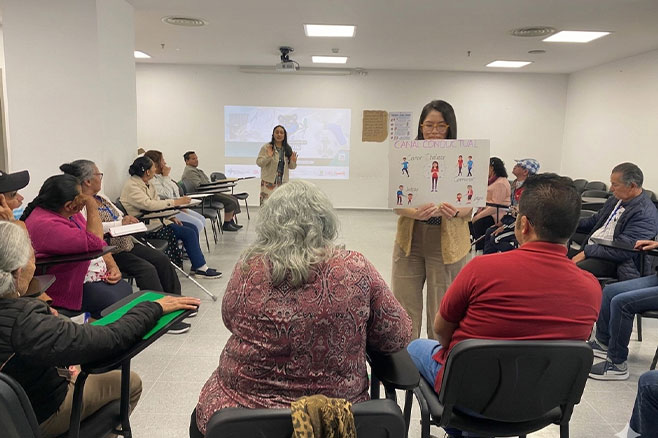
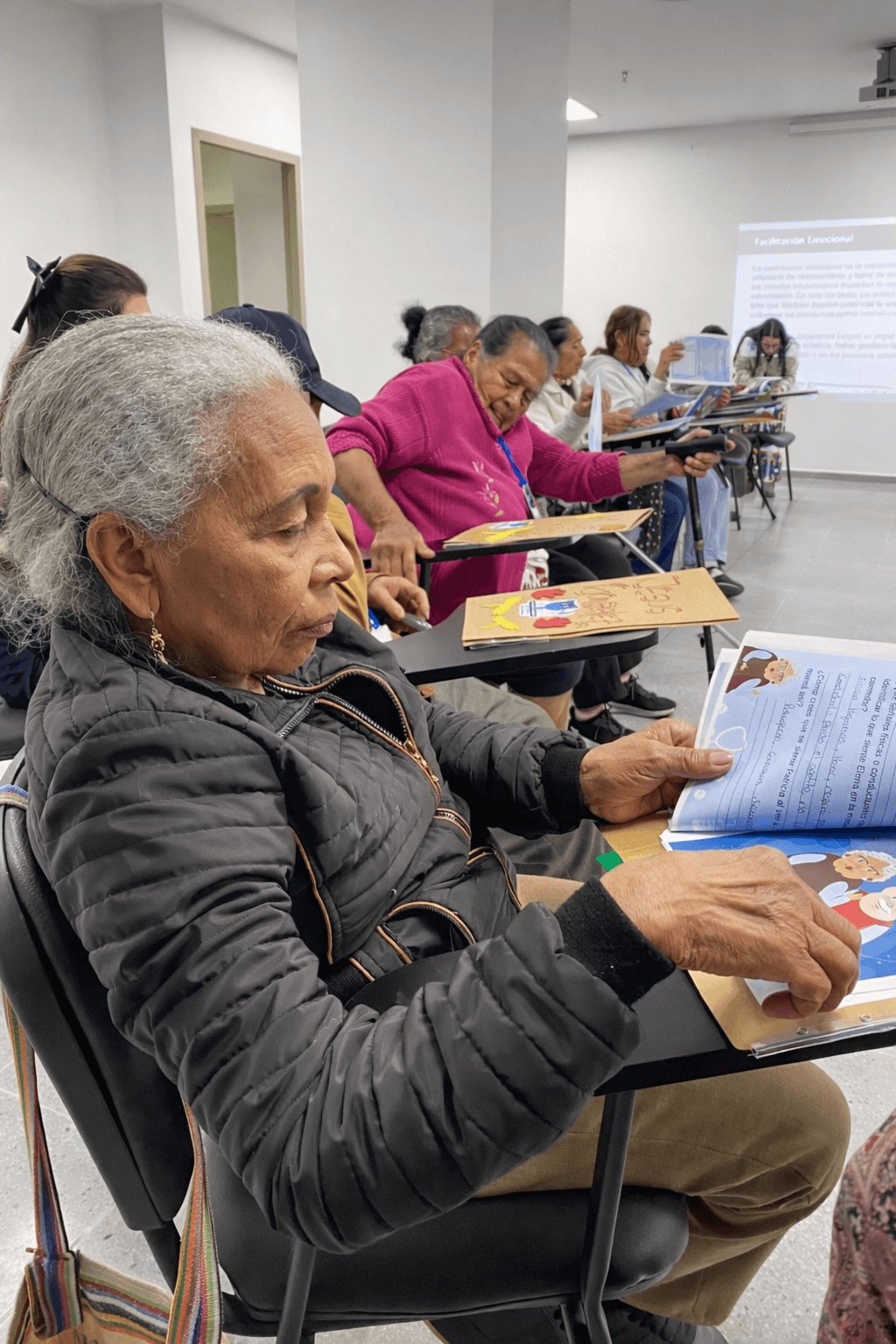
The project’s pilot program is being implemented at Bosa Hospital from two complementary perspectives: that of older adult patients who attend the institution accompanied by their caregivers, and that of the health care professionals responsible for diagnosis and follow-up care
The Dragonfly Project was launched in 2023 in response to a call for proposals issued by the District Agency for Higher Education, Science, and Technology (Atenea), and between August 2025 and March 2026, its pilot phase has been implemented at Bosa Hospi - tal, maintaining a dual focus on patients—accompanied by their caregivers—and health care staff involved in their clinical mana - gement and follow-up.
Patients no longer feel alone; they share experiences and needs, and advise one another, allowing them to build a dynamic based on empathy, active listening, and trust
The Dragonfly Project was launched in 2023 in response to a call for proposals issued by the District Agency for Higher Education, Science, and Technology (Atenea), and between August 2025 and March 2026, its pilot phase has been implemented at Bosa Hospi - tal, maintaining a dual focus on patients—accompanied by their caregivers—and health care staff involved in their clinical mana - gement and follow-up
According to professor Torres, both groups share a common objective: to assess the impact of emotional education through the health literacy program in the context of chronic noncom - municable diseases. She explains that “patients are supported in developing greater self-understanding, identifying the emotions they experience, and acquiring tools that facilitate informed de - cision-making” “For health care professionals, on the other hand, the emphasis lies in strengthening patient communication and in fostering socio-emotional competencies that enhance interperso - nal relationships with both colleagues and patients, in alignment with clinical practice guidelines.”
All Emotions Originate in the Body
For Caleb Saldaña Medina, tenured professor in the Office of the Dean of Student Affairs and co-researcher of the Dragonfly Project, The project’s pilot program is being implemented at Bosa Hospital from two complementary perspectives: that of older adult patients who attend the institution accompanied by their caregivers, and that of the health care professionals responsible for diagnosis and follow-up care. the importance of considering emotions in the course of a chronic illness helps patients understand and better cope with their new lifestyle and also adapt to their environment, thereby enhancing their well-being. He em - phasizes that “patients cannot be understood outside their context” “The entire health care process is very important. From diagnosis to the adoption of new habits—it all generates a wide range of emotional responses. Similarly, there are also the caregiver’s emotions, as they may ask themselves, for example: “who will take care of my children while I accom - pany my mother to the hospital?”
The Dragonfly Project has developed a series of modules grounded in the emotional intelligence framework proposed by John D. Mayer and Peter Salovey, complemented by the emotional education approach of Rafael Bisquerra. These modules are structured around four core dimensions of emotional intelligence of Mayer and Salovey: (1) perception and identification of emotions; (2) emotional facilitation, understood as the use of emotions to guide action; (3) understan - ding and acceptance of emotions in oneself and others; and (4) emotional regulation and autonomy, from the model proposed by Ra - fael Bisquerra, emphasizing the patient’s active role in managing emotions and self-care practices.
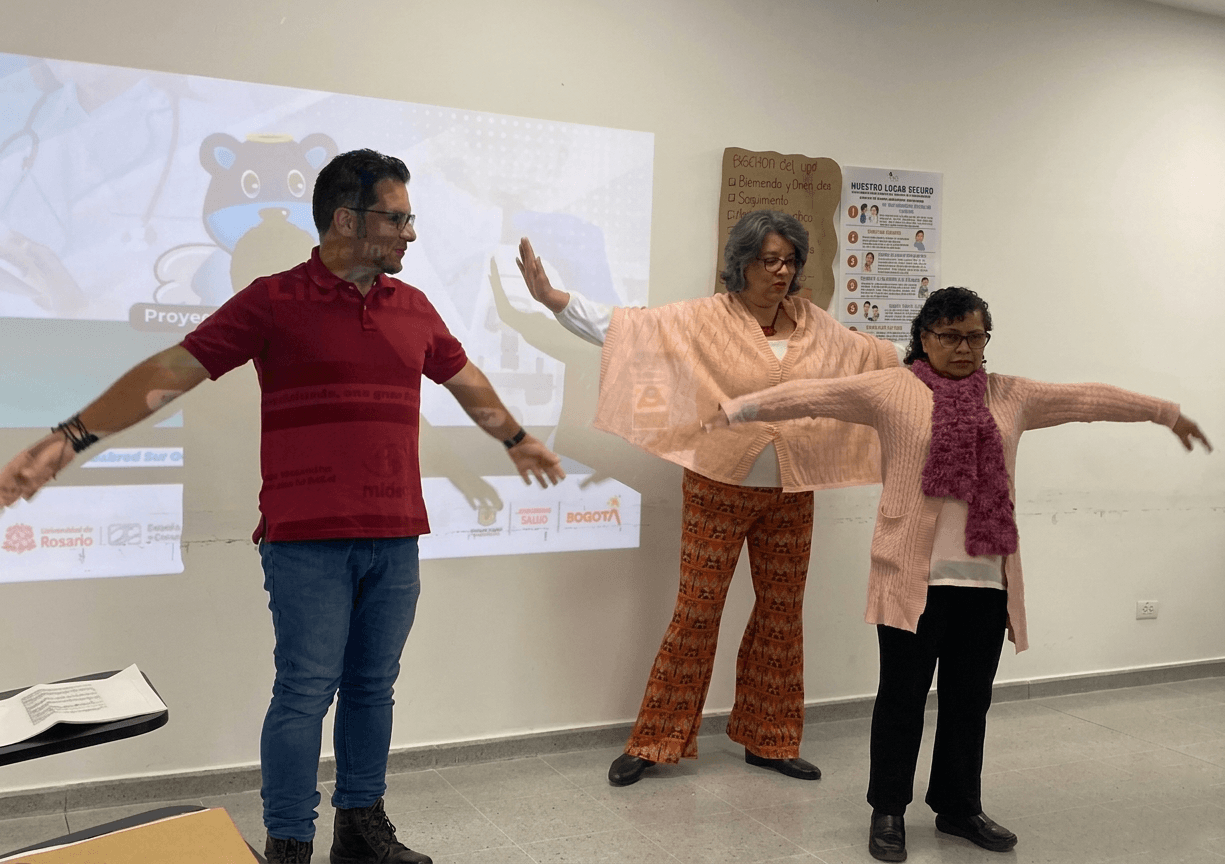
Each module incorporates specific activi - ties aligned with its objectives. For instance, professor Saldaña explains that, as part of the dimension of emotional perception, tech - niques such as corpography—the use of the body as a medium for expression and explo - ration through movement—are employed to help individuals identify where emotions are experienced physically. In addition, focus groups are conducted to explore participants’ motional patterns and habits. The analysis of clinical records and related documentation provides insight into the extent to which patients’ emotional experiences are addressed during consultations. As the research team expresses, clinical care often prioritizes physiological symptoms, leaving limited space for the exploration of patients’ emotional states. Collectively, these methodological tools enable a more comprehensive understanding of patients’ contexts, including their social environments and the factors influencing decision-making in the management of their illness
The program has already observed notable changes in participants’ behavior, particularly among individuals with chronic conditions.
As explained by professor Torres, “this pilot initiative is designed to evaluate whether the pedagogical model—grounded in experiential and situated learning—effectively fosters the intended competencies and contributes to improved adherence to self-care practices, the adoption of healthier habits, and compliance with prescribed treatments, ultimately enhancing disease management.”
The program has already observed notable changes in participants’ behavior, particularly among individuals with chronic conditions. According to Professor Torres, “whereas initial responses were often limited to brief or non-elaborated expressions, patients are now able to articulate their emotions and the underlying reasons for them with greater clarity.” She further notes that participants have developed a more structured understanding of emotional processes. “They can recognize the three primary dimensions: physiological, behavioral, and cognitive. They also provide concrete examples and are actively focused on their diet. They now trust us and have realized that we value their knowledge,” she explains.
Within the emotional perception module, corpography— understood as the use of the body as a medium for expression and exploration through movement—is employed to identify the bodily loci in which emotions are experienced.
Researchers also highlight the development of collaborative dynamics fostered through sustained interaction among participants. For example, they have noticed that patients no longer feel lonely, express their needs, and exchange practical advice on what works and what doesn’t, thereby creating a supportive environment characterized by empathy, active listening, and mutual trust.
“They are very committed, we have visual records, and they come to the workshops with their assignments completed.” That motivates them and helps them develop their cognitive and social competencies, which are very important in health care”, concludes Professor Torres
Challenges that Foster Growth
During the pilot phase, an open call for participation was extended to both patients and health care professionals. From a total of 600 patients enrolled in the Cardiovascular, Cerebrovascular and Metabolic Care Pathway of the Southwest Subnetwork, 30 individuals who met the clinical criteria and had availability during the scheduled sessions agreed to participate. On the other hand, for the other group, the hospital recruited 15 volunteer professionals—including physicians, administrative staff, and physical therapists—who were expected to remain engaged throughout the program
d the relocation of some physicians, which has affected the continuity of workshop implementation. “Employment conditions in the public health care sector often involve short-term contracts or internal institutional rotations, leading to participant attrition” as noted by professor Torres. At present, the program includes 28 patients and 11 health care professionals, and this level of participation is expected to be maintained until the conclusion of the pilot study.
As explained by Martha Torres , principal investigator of the project, “this pilot program is intended to assess whether the pedagogical model—grounded in experiential and situated learning—effectively develops the targeted competencies and enhances adherence to self-care practices.”
Furthermore, the initial methodological design envisaged delivery through a digital platform. However, when work with patients had begun, it was noted that thematic implementation should be done differently. Many participants reported discomfort with fully virtual engagement due to factors such as limited digital literacy, connectivity constraints, or because they lived alone and could not rely on help from family members or caregivers to use a computer or similar devices.
Additionally, the presence of sensory or physical impairments among some patients necessitated further methodological adjustments to ensure accessibility and inclusion.
A Project Adapted with Artificial Intelligence
According to professors Torres and Saldaña, digital support for the program has been implemented in collaboration with the Colombian startup Bumii, which specializes in emotional education through artificial intelligence and the messaging platform WhatsApp. First, the platform automates the delivery of emotional intelligence content—such as images, audio messages, and text—aligned with the thematic structure and schedule of the program. These are distributed to participants via WhatsApp, enabling ongoing engagement and reinforcement of learning outside in-person sessions.
Second, user interactions are systematically collected and analyzed, allowing the Dragonfly Project research team to conduct thematic and impact assessments.
“For example, when addressing breathing techniques, participants use WhatsApp to receive guided instructions and prompts through automated messages with breathing exercises, during which, patients receive instructions or questions to help them work on the topic of interest.” The novel aspect of this system is that it allows users to submit audio messages or written inputs describing their experiences or posing questions, to which the platform provides personalized responses tailored to individual needs. At the conclusion of each activity, participants complete brief assessments via WhatsApp. The resulting data informs the customization of in-person sessions, based on the participants’ responses”, according to Saldaña
Currently, the Dragonfly Project remains in progress. Given the positive reception among participants and the health care team at Bosa Hospital, there is an expectation that this methodological approach may be scaled and implemented in other health care institutions across the country.