In the interest of aligning undergraduate degree projects with university rules and curriculum guidelines, and keeping in mind students’ needs and expectations, an analysis of the relevance and quality of the options to be offered was carried out. In designing these options, the following criteria were taken into account:
- According to the Universidad del Rosario Academic Council’s pedagogical and curricular guidelines (2018), each academic program must offer more than one degree project track “so that students have different options that enable them to forge their educational path and ensure its cohesion with their postgraduate studies or professional practice” (p. 44).
- This document also notes that degree projects may take the following forms, depending on educational level: thesis (monograph, dissertation, case studies, journalistic research, among others), internships, apprenticeships, research assistantships, or graduate coursework for undergraduate programs (Academic Council, 2018, p.44).
Undergraduate students in the School of Administration may thus choose between five different degree project tracks: capstone experience, Programa Avanzado en Dirección de Empresas (Advanced Business Management Program, also known as PADE), research assistantship, graduate coursework, and entrepreneurship.
Research and Ethics Training
Implementation of the above is only possible insomuch as it provides for training in research and in ethics and scientific integrity in accordance with the guidelines for curriculum building established by the university’s Academic Council. Thus, in order to ensure sufficient use of best practices in ethics and scientific integrity, formal opportunities for students to receive training in this area, such as the Methods of Scientific Research class and Phase 1 of the degree project, have been included as part of the curriculum throughout their academic career. Similarly, other informal yet intentional educational opportunities to progress in this area are offered early in the program (see the table below).
Graph 1. Training path in research and scientific ethics and integrity
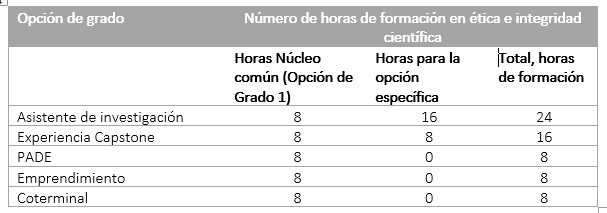
In addition to the above and to ensure that degree projects a) have greater scope and depth in terms of research and b) introduce students to a broader range of ethical and scientific integrity dilemmas, consideration is also given to the need to incorporate different kinds of ethics training depending on the educational opportunity in question, as described in Table 1.
Table 1. Ethics training depending on degree project track
Degree project tracks
1. Capstone experience
The capstone experience allows the student to complete a guided research project that facilitates intellectual debate between mentors and mentees, with help from peers. It provides the student with the opportunity to become familiar with real-world dilemmas through an interdisciplinary and experiential approach.
From a student-centered learning perspective, capstone experiences are considered a best practice for preparing students for a complex, modern future (Holley, 2009).
At the School of Administration, the capstone experience offered to students has been developed as two phases (Phases 1 and 2), as described below in terms of scope, assignments, and deliverables:
1.1 Capstone Experience Degree Project Phase 1
- Scope: Small groups of (4-5) students that resolve a business dilemma under the supervision of a professor specializing in the subject matter.
- Assignment: Student prepares and outlines the project to be completed.
- Final deliverable: Paper and presentation with the following structure:
- Paper structure:
a. Purpose statement
b. Background of the dilemma
c. Conceptual background
d. Description of the solution
e. Means of assessment
f. Expected results
g. Work plan
- Purpose statement: A description of why the student chose the capstone experience, and this dilemma or subject in particular, with a general description of the same.
- Objectives: Explanation of the desired result or expected course of action in order to find a solution.
- Contextualization: Local, regional, and international indicators of the issue from a practical and scientific perspective.
- Expected user: who will find the solution to the problem useful and in what way.
- Results: A description of expected and measurable results.
- A work plan than includes a timeline of activities.
1.2 Capstone Experience Degree Project Phase 2
- Scope: A small group of students that continue the work of resolving the business dilemma under the supervision of a professor.
- Assignment: Resolution of the dilemma and presentation of the paper.
- Deliverable: Paper with the following structure:
- Introduction
- Description of the dilemma
- Objectives
- Background
- Significance of the solution
- Means of assessing how activities completed (classes, meetings, engagement with organizations, interviews) and the results of those experiences support the proposal
- Proposed solution to the dilemma
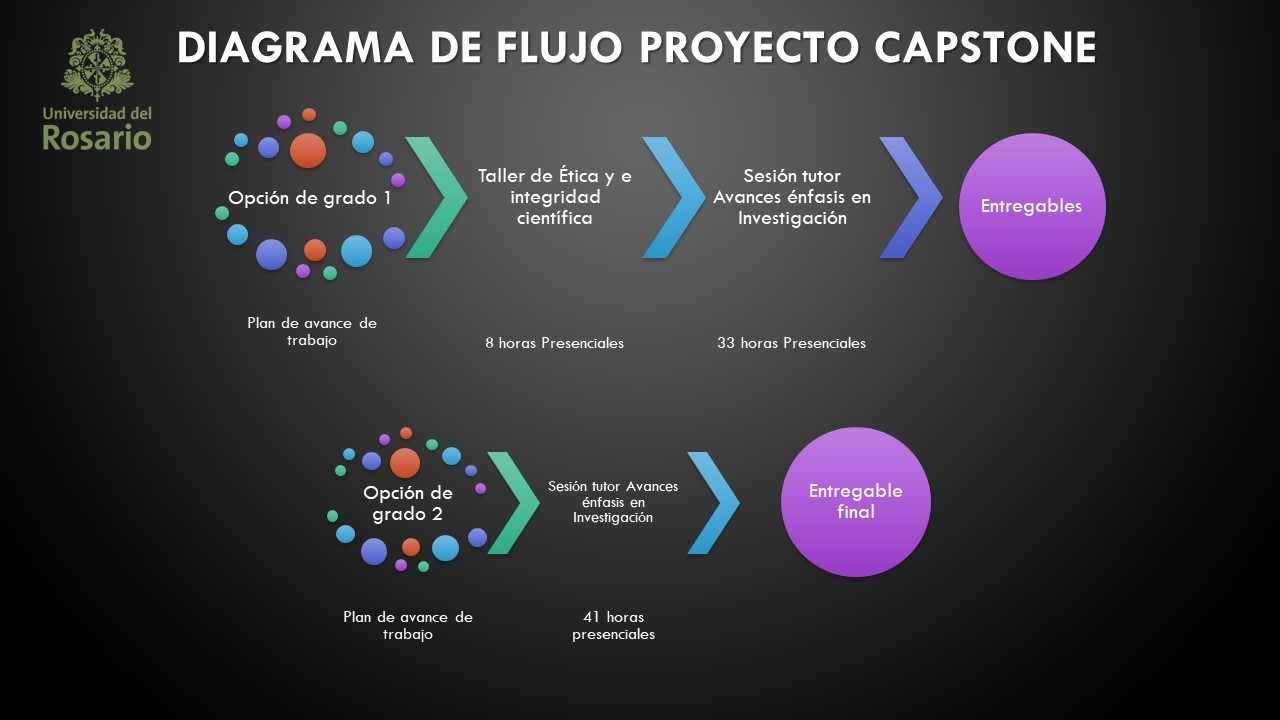
Graph 2. Capstone formation route
2. Advanced Business Management Program (Programa Avanzado en Dirección de Empresas, or PADE
PADE is a training program for developing management skills applicable to different aspects of corporate life and different economic sectors. As mentioned above, PADE promotes cohesion with students’ professional practice, and with that in mind, it prompts them to think about solutions to organizational challenges from a management perspective instead of that of an advisor. One of the main differences between PADE and its predecessor PAFE is its emphasis on developing business solutions by utilizing laboratories, facilitating the development of skills that are in high demand in today’s business environment. Like the other degree projects tracks, PADE is completed in two phases, as described below:
2.1 PADE Degree Project Phase 1
- Scope: Encourage the development of laboratory skills
- Assignment:
Sessions will be held with a mentor to develop organizational management and administration skills.
- Deliverable: Paper with the following structure:
- Development
- Bibliography
2.2 PADE Degree Project Phase 2
- Scope: Encourage the development of laboratory skills
- Assignment:
- Mentoring sessions
- Development of organizational management and administration skills
- Deliverable: Paper with the following structure:
- Introductionn
- Theoretical and conceptual framework
- Conclusions and recommendations
- Bibliography
Figure 3. PADE structure
3. Research Assistance
According to the Curricular and Pedagogical Guidelines Document of the Academic Directorate (2018), under the figure of Research Assistance the undergraduate student “may support the design and execution of formal research projects, attached to a research group of the School or Faculty or institutions with which there is an academic cooperation agreement for the implementation of joint projects ”(p. 47). Said document also indicates that this work must be carried out by the student under the supervision of a university career professor, who, within the framework of his exercise as a researcher, will accompany the student's learning process.
In the undergraduate programs of the School of Management this option is presented as follows:
3.1 Research Assistant Grade 1 Option
- AScope: Training in basic and / or applied research for students, through the development of a research project led by a professor from the School, the Research Group of the School or the University, which is relevant to the area of knowledge .
- Activities to develop: Delimit research questions, conduct literature reviews, construct scientific documents.
- Deliverables: Document that describes the analysis carried out on the set of papers, which allow the student to define the preliminary questions that will accompany the systematic literature review that they would develop in the Grade 2 Option.
- Structure of the deliverable document
- Theoretical framework, built from the review of at least 20 papers, where the topic or research problem is expanded based on what is found in the literature that motivates new research questions.
- Justification of the research questions considered: why they are interesting within the topic of the research project.
- Bibliographic references
3.2 Research Assistant Grade 2 Option
- Scope: Training in basic and / or applied research for students, through the development of a research project led by a professor from the School, the Research Group of the School or the University, which is relevant to the area of knowledge .
- Deliverable: Document of systematic review of the literature (article) that is registered in the Institutional Repository.
- Structure of the deliverable document
- Introduction
- Methodology. (moment 2)
- Study results
- Conclusions
- Bibliographic references
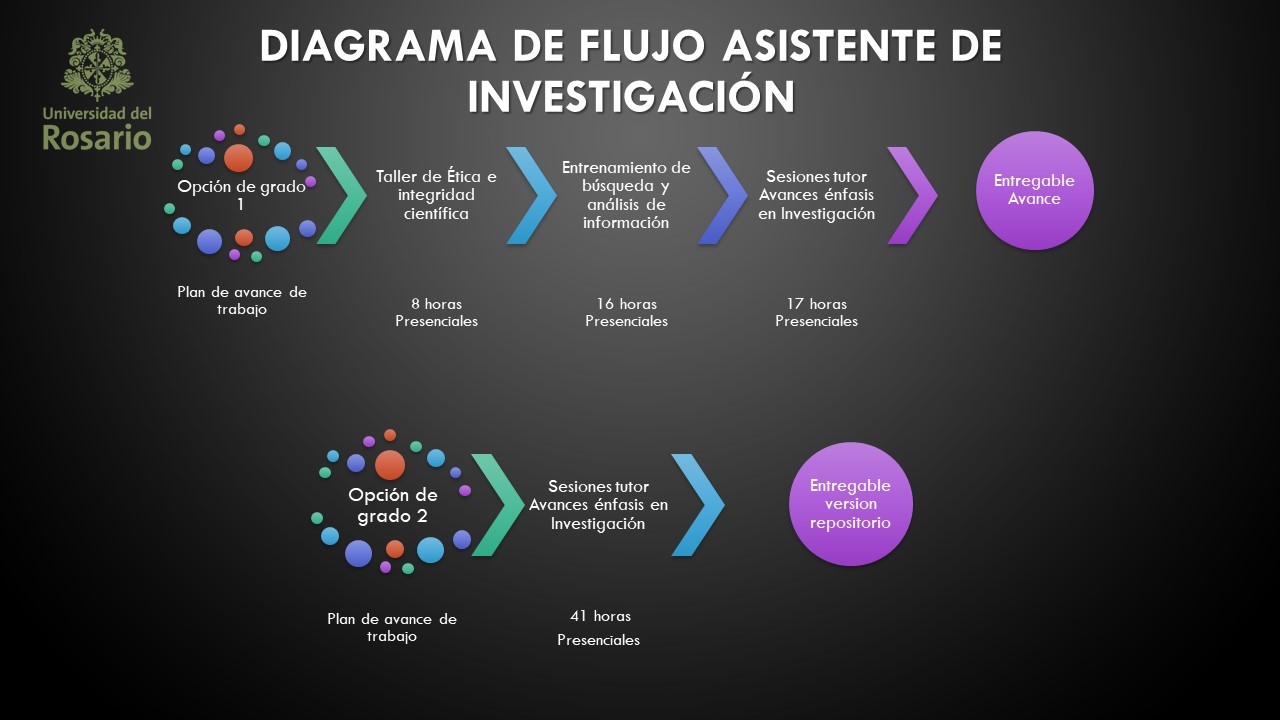
Graph 4. Training path Research assistant.
4. Entrepreneurship
The Entrepreneurship degree project offered to undergraduate students will have the same focus as previous versions and will be completed in accordance with the guidelines established by the Universidad del Rosario Entrepreneurship Center. Like the other degree projects, the Entrepreneurship project is organized into two phases (Phases 1 and 2) and will be completed as follows:
4.1 Entrepreneurship Degree Project Phase 1
Scope: An academic, experiential and training opportunity aimed at enabling the student to, first, develop the skills and expertise necessary to identify real issues and create and lead innovative solutions and, second, envision and implement sustainable entrepreneurial projects focused on the common good and with a global vision (Entrepreneurship Degree Project Phase 1 Syllabus).
Assignment:
Conduct workshops, technical consultin g, and assessment panels along with one-on-one sessions with a mentor.
Deliverable: Paper with the following structure:
- Executive summary
- Issue
- Value proposition
- Prototype
- Financial model I
- 3D business model
- Conclusions and next steps
- Bibliography
4.2 Entrepreneurship Degree Project Phase 2
Scope: In Phase 2 of the Entrepreneurship degree project, the student is expected to finalize their entrepreneurship project, creating clear operational, financial, legal, sales, and marketing processes. As a minimum requirement, the student must prove market validation of their product or service. The student must also demonstrate consistent growth relative to Phase 1 of the Entrepreneurship degree project as well as use of best practices in entrepreneurial self-management. It should be noted that the proposed structure of this second phase of the Entrepreneurship degree project is subject to change depending on the individual characteristics of each student and their entrepreneurship project and at the discretion of the Entrepreneurship Center, UR Emprende, in its initial assessment of the project.
Assignment:
Conduct workshops, technical consulting, and assessment panels, and sessions with a mentor, just as in Phase 1.
Deliverables:
1.Paper with the following structure:
- One-pager
- Executive summary
- Expanded business model
- Financial model II
- Legal elements
- Commercial elements
- Marketing and communications strategy
- Conclusions and next steps
- Bibliography
2. Market-validated prototype
3. Final presentation
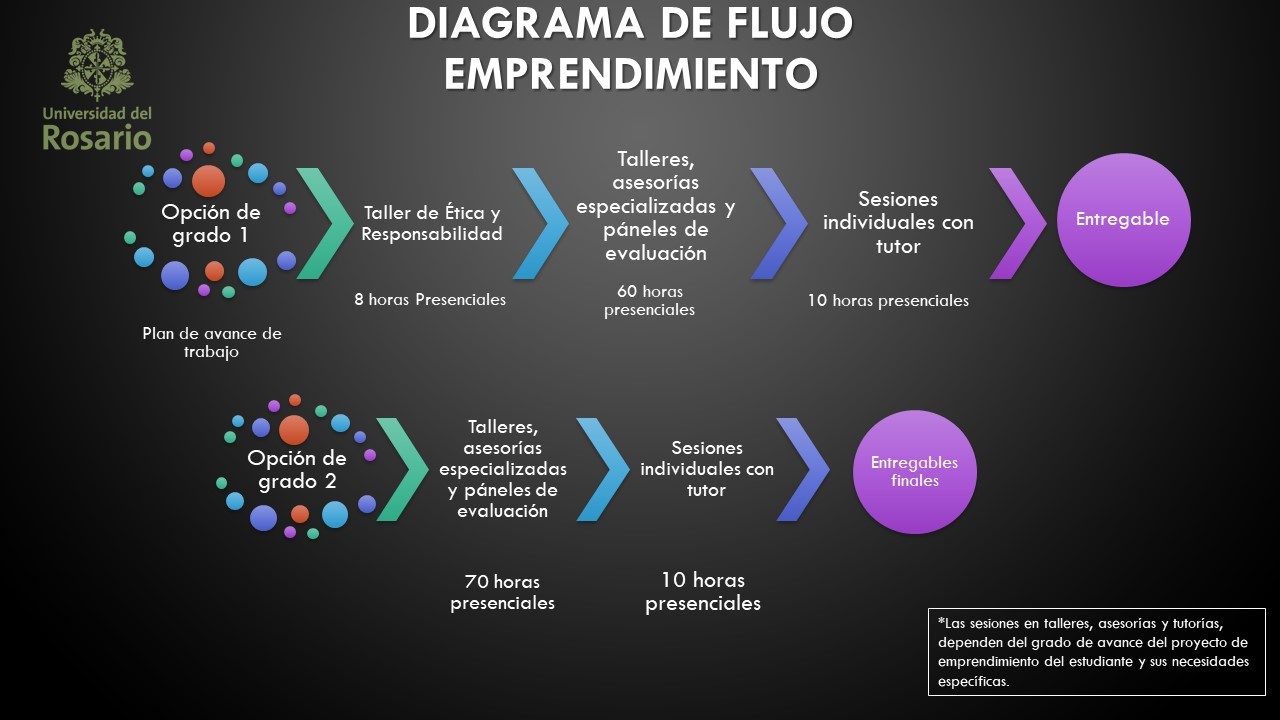
Graph 3. Entrepreneurship training route
5. Graduate coursework
The graduate coursework track authorized for undergraduate programs in the School of Administration is based on regulations stipulated by Universidad del Rosario in both the academic guidelines and the Presidential Decrees (1530 in 2017 and 1115 in 2010) that establish this track. The pedagogical and curriculum guidelines (Academic Council, 2018) define the graduate coursework track as “one of the degree project options for earning a professional qualification that undergraduate students may choose. In this track, students must take and pass a number of classes offered and established by the master’s programs at Universidad del Rosario, as well as other academic demands, having already met the university’s requirements for choosing this option” (p. 46).
The graduate coursework degree project is an educational opportunity that encourages the student’s exposure to different academic areas, facilitates interdisciplinary relationships, and offers an opportunity to work on academic proposals across schools and faculties.
In choosing the graduate coursework degree track, Students in the School of Administration must identify their master’s program of interest and apply for admission to the same in accordance with the requirements established by each program. Once admitted, the student must take 12 credits per phase (1 and 2) of the project and pass them. Upon completing this stage, they will then request that their grades for Phases 1 and 2 be applied to their transcript, along with the average earned in the completed master’s program courses.
5.1 Requirements for choosing this track:
1. Have passed all the courses established by the undergraduate program as prerequisites for taking graduate coursework. These courses must make up at least 75% of the corresponding undergraduate program’s curriculum.
2. Have a weighted grade point average equal to or higher than three point eight (3.8).
3. Submit a statement of interest in being selected to complete the graduate coursework track, in writing, to the director of the master’s program, with approval from the Undergraduate Academic Secretary.
4. Meet the admissions criteria established by the master’s program.
5.2 Passing the graduate coursework track
To pass the graduate coursework track, the student must:
1. Take all of the classes in the track over a maximum of two academic periods.
2. Pass all of the classes in the graduate coursework track.
3. Meet and complete all other academic requirements previously established by the master’s program.
Altogether, these classes must always add up to at least 12 academic credits but may not exceed 16 academic credits.
Para acceder al paso a paso de este servicio, haga clic aquí